By day Coen is human; by night he is a vampire. That duality is the skeleton of The Blood of Dawnwalker, and the entire game is built around making both halves earn their place. This guide breaks down the two forms — what Witchcraft is for by day, what Vampirism and Blood Hunger do by night — and how to plan a full day around them. If you are brand new to the game, the beginner guide covers the basics first; this is the deep dive on the forms themselves.
The two forms at a glance
| Day (human) | Night (vampire) | |
|---|---|---|
| Who you’re playing | Coen the human | Coen the vampire |
| Signature toolkit | Witchcraft | Vampirism abilities |
| Main pressure | The 30-day clock | Blood Hunger |
| Combat feel | Measured, ritualistic | Aggressive, predatory |
| Best for | Talks, quests, setup | Fights, night-only options |
The split is not cosmetic. Each form opens different ways to solve problems and different parts of Vale Sangora. Because exploration and combat are free and only hourglass-marked actions spend days, you can work both halves without the clock advancing — use the free hours to get each half to do the work it is good at.
Witchcraft: the day form
Witchcraft is Coen’s daytime toolkit — his way of shaping the world while he is still human. The day is when the valley is fully human: talks, story quests, and the everyday business of a plague-ridden 1347 all happen then, and Witchcraft is how you punch above your weight in that half.
The habit that pays: spend days on story progress and setup, not on loitering. Quests and conversations are where the clock gets expensive, so make the days you spend on them produce. Witchcraft also feeds a skill tree of its own name, so investment here compounds across the whole game — what you put into it shows up in both forms.
Vampirism: the night form
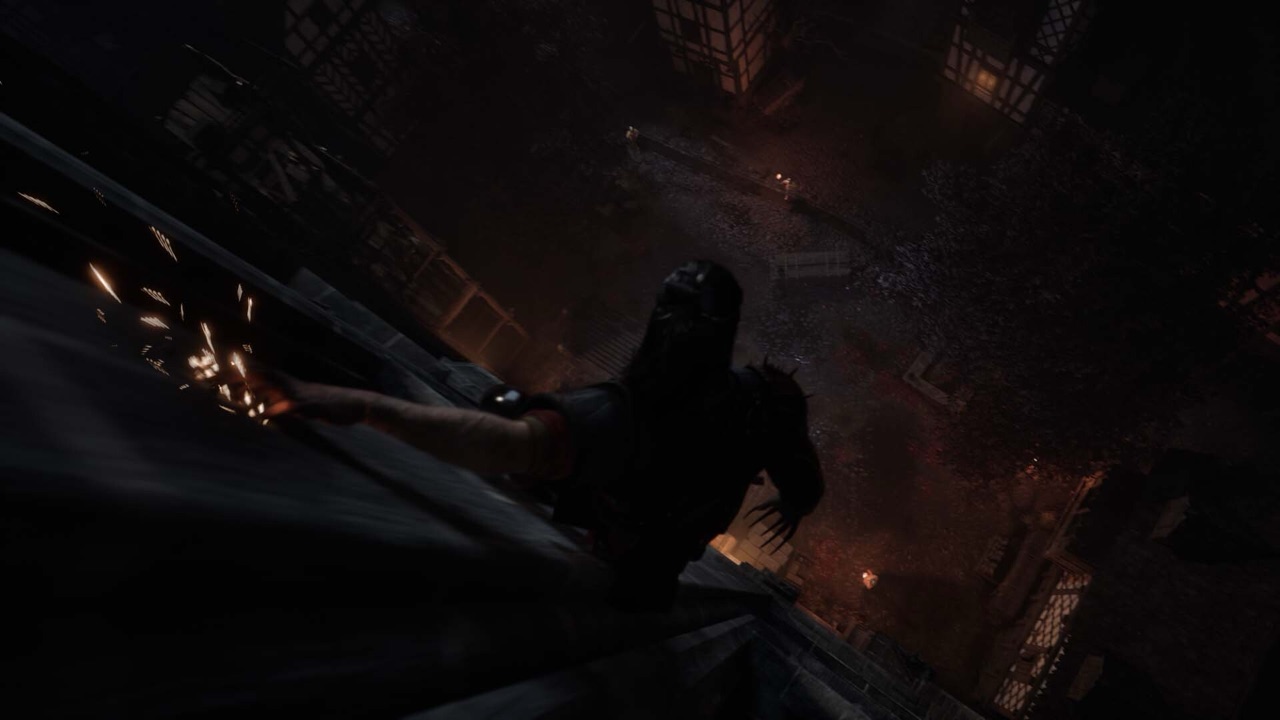
By night, the same world comes back with different rules: Coen is a vampire, and Vampirism is his toolkit. The vampire form plays faster and more aggressive — the predator half to the human’s measured day — and the night is where your build’s shape becomes obvious, because Swordmastery, Witchcraft, and Vampirism all land harder when you can bring the full vampire package to a fight.
Night abilities that simply do not exist during the day:
- Planeshift / teleport to move between rooftops and escape danger
- Wall climbing for vertical traversal the human form cannot reach
- Claw strikes that outpace sword swings for raw DPS
- Wolf shape (with the Shapeshift perk) for fast overland travel
Vampire abilities scale with Corruption — a meter raised by drinking blood from humans, animals, or monsters. Higher Corruption unlocks stronger perks but also increases frenzy risk if Blood Hunger runs too low.
Then there is Blood Hunger. It is the blood craving that runs through every vampire night: a pressure that builds and forces you to plan feeding as part of the night rather than an afterthought. That is the real difference between the two forms — the day asks you to be efficient with your time, the night asks you to be efficient with your hunger too.
Hunger: the tipping point
When Blood Hunger drops to zero (nighttime HP bar shrunk to 1 segment), dialogue options can suddenly shift — a peaceful conversation might reveal a hidden “Give in to the hunger” choice that lets you attack and feed on whoever you are talking to. This is not a bug; it is the game letting you manage hunger even mid-conversation. But it changes NPC relationships, so choose deliberately.
What does not work at night
Human consumables — potions, prepared food — do nothing during the vampire half of the day. Only blood-based items and direct feeding heal you at night. Witchcraft spells still work, but they cost HP to cast and that HP cannot be recovered from food or normal potions — only from feeding or spell kills (Frugal Witchcraft perk).
Skill tree timing labels
Every perk in the three trees carries one of three timing labels, and the game enforces them:
| Label | Meaning | Examples |
|---|---|---|
| Anytime | Works in both human and vampire form | Sustained Focus, Endless Effort, Perfect Block |
| Daytime | Human form only | Mercurial Fervour, Frugal Witchcraft, Life Lock |
| Nighttime | Vampire form only | Shapeshift, Voracious Bite, Hastened Corruption |
Two practical habits:
- Plan where feeding fits in the night. Decide it deliberately instead of reacting to it.
- Treat the night as a resource with a budget. It is short, the hunger is running, and you are spending one of your 30 days. Pick what the night is for before it ends — a fight, a goal, a setup — and give it that.
Planning the full day
- Do the human-shaped things by day. Talks, story beats, and the business that needs a person in 1347. The day is when the clock is most expensive, so make it produce.
- Schedule the heavy fights for the night if your build is a vampire. If you are investing in Vampirism, the night is your advantage; do not waste it on things the day form can handle.
- Use Witchcraft for the moments that change the shape of the night. The day’s magic is as much a setup tool as a combat tool — spend it where it does the most.
- Check Blood Hunger early and often. A craving you ignored for half the night does not go away; manage it at the start of the night, not the end.
- Remember the clock. Only hourglass-marked quests and conversations spend days; exploration and combat are free — the 30-day timer guide has the full rules for what consumes days.
How your build changes the balance
Both forms share one progression line, and the three skill trees decide which form you lean into:
- The Swordsman build puts most of its weight into Swordmastery, and the two halves end up playing more alike — a strong Coen in either form.
- The Predator build sinks into Vampirism, and the night becomes the main event: the day is the setup, the night is the show.
- The Hybrid spreads across all three trees, getting a little more out of every half of every day without ever being at the top of either.
The skill trees overview covers what each tree offers, and the Predator and Hybrid guides have full point plans if you want to go all in on one of those shapes.