The Blood of Dawnwalker front-loads its learning curve: a human/vampire duality, a 30-day clock, and three skill trees before you have done very much. This beginner’s guide gets you from the first moments of 1347 to a stable rhythm — what the game is, how the loop works, and what to do in your first hours in Vale Sangora.
What the game is
The Blood of Dawnwalker is an action RPG from Rebel Wolves, published by Bandai Namco Entertainment, that launched on 2026-09-03 for PC, PlayStation 5, and Xbox Series X|S (source: official Rebel Wolves site). You play Coen, a Dawnwalker — half human, half vampire — in the plague-ridden Carpathian valley of Vale Sangora, year 1347.
The core premise is not subtle: by day you are human, by night you are a vampire, and each half of the day carries its own toolkit. Witchcraft by day, Vampirism and Blood Hunger by night. That is the whole game in one sentence, and everything below unpacks it.
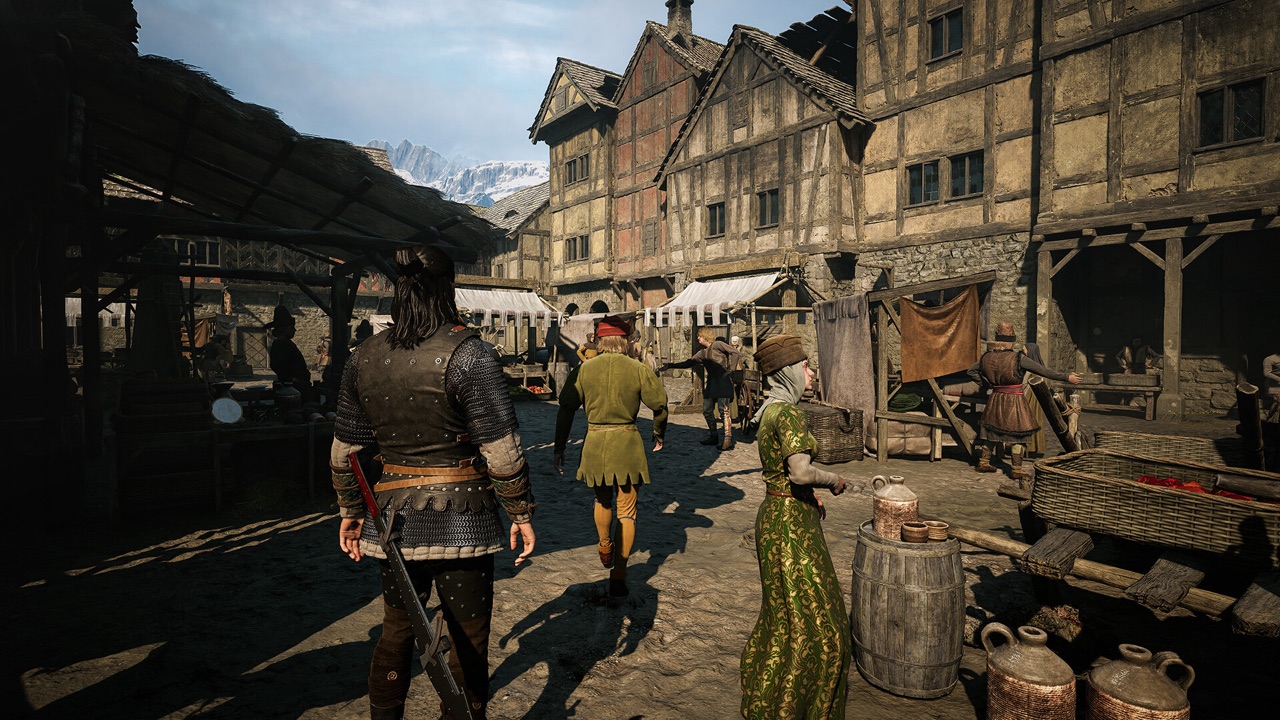
The story builds toward a confrontation with Brencis and his three vampire vassals — Ambrus, Bakir, and Xanthe — but on your first playthrough the loop matters more than the plot. Learn the loop and the story will take care of itself.
The day/night loop
Every in-game day splits cleanly in two, and the two halves play differently:
| Day | Night | |
|---|---|---|
| Who you’re playing | Coen the human | Coen the vampire |
| Toolkit | Witchcraft | Vampirism abilities |
| Main pressure | The 30-day clock | Blood Hunger |
| Best for | Story progress, talks, setup | Aggressive fights, night-only options |
Both halves share the same progression. Your points go into the three skill trees — Swordmastery, Witchcraft, and Vampirism — and what you invest shows up in both forms, so the day form and the night form are one character, not two.
The day/night guide has the full breakdown of each form, and the skill trees overview shows you how to spend points once you know which half of the day you actually live in.
The 30-day clock
You get 30 days and 30 nights to work with, and only one kind of action spends them:
- Hourglass actions. Completing quests and having certain key conversations carry a small hourglass icon and advance the clock — sometimes by a full day — when you finish them.
- Skill investment. Learning or upgrading a skill also advances the clock by a segment or two — progress is not free.
- Everything else is free. Exploration, combat, and menu time do not move the clock, so you can take your time between those beats.
The part that matters: exceeding 30 days does not force a game over. You keep playing, the story keeps advancing, and what changes is which endings are available — especially the family-related outcomes. The clock is a soft deadline. A budget, not a countdown.
The 30-day timer guide covers exactly what consumes days, what does not, and how to plan around the clock.
What to do in your first hours
- Play the prologue without optimizing. Your job is to learn the loop, not to be efficient. The opening asks you to learn one thing at a time, which is the right order. The prologue walkthrough covers what it asks of you.
- Live out one full day and one full night before committing to a build. One cycle is enough to feel the difference between Witchcraft by day and Vampirism by night, and that feeling decides which tree you sink points into first.
- Pick a direction and hold it. The three common shapes are the Swordsman (Swordmastery), the Predator (Vampirism), and the Hybrid that mixes all three. Committing early matters more than picking “correct” — all three win if you play them honestly.
- Do the story’s required beats first, then weigh the optional ones. The timer bites through optional content — conversations and quests with a day cost, and the skills you learn along the way. Do the required beats while you still have margin, then spend what is left on the things you actually want.
- Replay a fight you lose before you retry it. Figuring out what beat you — a whiffed parry, a mistimed spell, a hunger spike you ignored — is worth more than a fast retry.
- Check the clock once per day. Not obsessively; a glance. Knowing how many days you have left changes how you say yes or no to the next quest.
Combat, in one breath
Fights mix directional attacks, parries, and spells: you commit to an attack in a direction, time a parry to punish an opening, and hold a spell for the moment that matters. The game punishes spam and rewards spacing — your first fights will feel slow on purpose, because you are being taught to be deliberate, not fast. The combat basics guide breaks all three mechanics down before you go looking for trouble.
If you do nothing else: learn the loop, protect your days, and commit to one build. Everything else is refinement.