Combat in The Blood of Dawnwalker is built on three verbs: attack in a direction, parry at the right moment, and spend a spell when the moment is right. This combat basics guide walks through each one and gives you the habits that turn first fights from slow and stiff into manageable. If you are new to the game entirely, the beginner guide covers the loop first — this one is the mechanics of the fights themselves.
Directional attacks
Attacks in this game have a direction: you do not just swing, you commit to a direction, and the enemy’s position relative to you matters. That is why your first fights feel slow — the game is asking you to read before you act, not to spam.
The habits that pay:
- Commit to a target, not to a button. Pick the enemy, pick the direction, finish the exchange you started.
- Use spacing as a weapon. Being in the position where your direction beats the enemy’s is half the win.
- Do not mash. Spam reads as desperation, and the game punishes it. Deliberate, directional exchanges are what the rewards are built around.
Parrying
The parry is the timing element: a well-timed parry turns an enemy’s attack back on them and opens a wide window to respond. A badly timed parry leaves you open — so the first rule of learning to parry is restraint.
How to learn it without getting punished:
- Pick one enemy and one of their patterns. Do not try to parry everything in your first few fights.
- Watch the attack, learn the window, parry once. One clean parry teaches you more than ten whiffs.
- Follow through. The point of the parry is not the parry — it is the window it opens. If you parry and do not punish it, you just spent a perfect moment.
Spells
Spells are your big levers: slower to get off, bigger in impact, and too valuable to burn casually. Treat them like ammunition you do not get back:
- Spend them on a moment, not a fight. A spell you use in the opening exchange is a spell you do not have when it matters.
- Use them to change the shape of the fight. Pressure is building, an opening has appeared, an enemy is fully committed — those are the moments.
- Spend them in the form you invested in. If your build leans one side of the day, that is where your spell investment does the most work.
Day and night change the fight
The three verbs are the same in both forms — directional attacks, parries, spells — but the shape of the fight changes with the time of day. By day you are human with Witchcraft, and exchanges feel measured. By night Vampirism takes over, the fights play more aggressive, and Blood Hunger is running in the background as a second resource to manage.
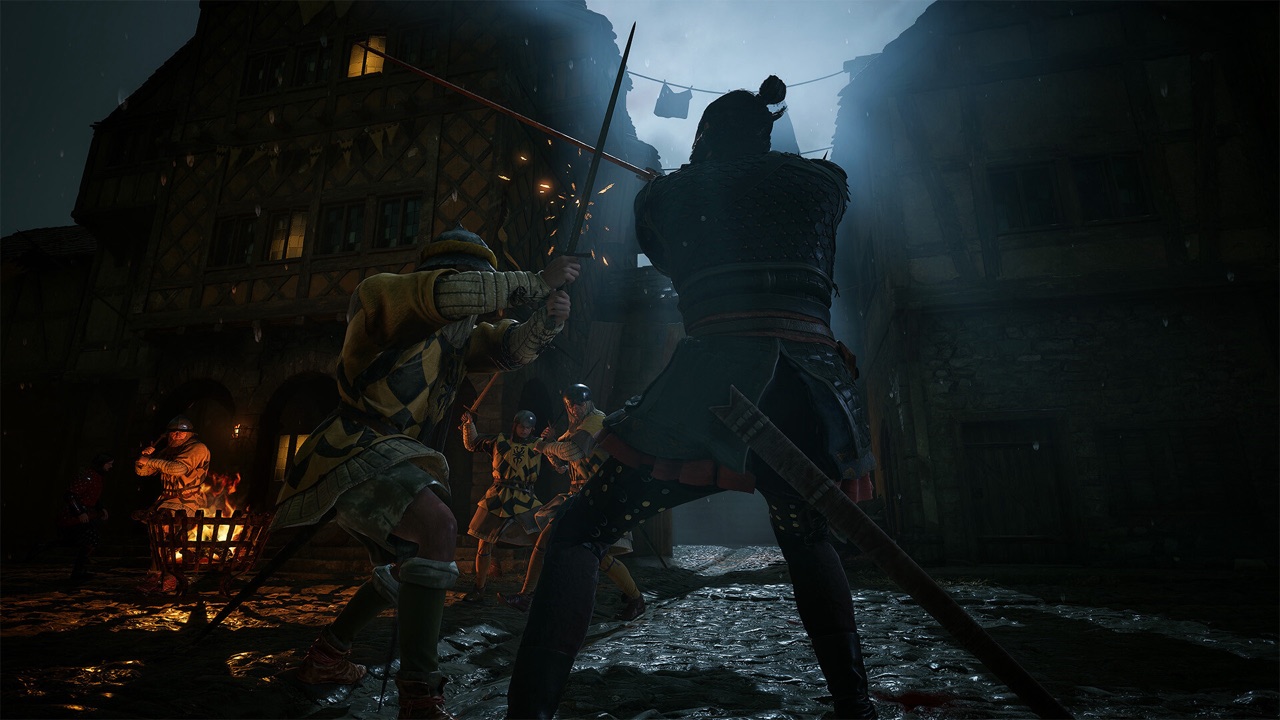
If combat feels different at night than by day, that is the system working, not a bug. The day/night guide covers how to plan around it.
Habits that will save you early
- Learn one pattern before trying the next. Enemy patterns are learnable, and the one you beat cleanly is the foundation for every other one.
- Parry conservatively. Only parry attacks you have seen the timing of. A whiffed parry costs more than the hit you take.
- Hold your spells. You will always have another moment later in the fight.
- Manage Blood Hunger before a fight matters, not during one. A hunger spike mid-fight is a fight you have already half-lost.
- Invest where your build lives. A Swordsman gets more out of every directional exchange and parry; a Predator makes the night the main event; the skill trees overview tells you which levers each build pulls.
When you are stuck
Losing a fight? Do not just retry it. Replay it with knowledge: what was the enemy doing when you went down? A whiffed parry, a mistimed spell, a directional exchange you committed to the wrong way, a hunger spike you ignored. One understood fight is worth ten blind retries.
And remember that the prologue fights are the game teaching you everything it will ask of you — if you are still tripping up later, the prologue walkthrough is a useful refresher on the exact moves you are expected to know.